
Reproductive Justice in Adoption
First/birth parents, formerly-fostered people, and adopted people working to dramatically increase bodily autonomy and self-determination for pregnant people considering adoption.

RJiA is building a groundbreaking online information & resource hub for pregnant people considering adoption.
We need your help to make it a reality!

WHO:
First/Birth parents & adopted people building support structures for pregnant people considering adoption
WHERE:
Online & everywhere—accessible, modern, mobile-first design to meet people in crisis & overwhelm
WHAT:
📱 Comprehensive, trauma-informed information designed for accessibility & crisis
👥 Adoption-knowledgeable Options Counseling & Peer Support Hotline (phone, text, & chat)
🍼 Searchable Resource Map & Database with guidance & navigation tools
🗣️ multi-media library of lived experience
🤰🏽 Anonymous User Forum moderated for safety & security
📆 Virtual Accompaniment to appointments with potentially coercive actors
📣 Healing justice & Leadership Development program for first/birth parents
🤝🏼 Capacity Building Trainings & Support for values-aligned organizations & workers including birth workers, healthcare professionals, and legal advocates
Can you help us make this vital resource a reality?
WHY:
The multi-billion dollar adoption industry - largely anti-abortion and religiously affiliated - is rife with misinformation, disinformation, and the coercion of pregnant people.
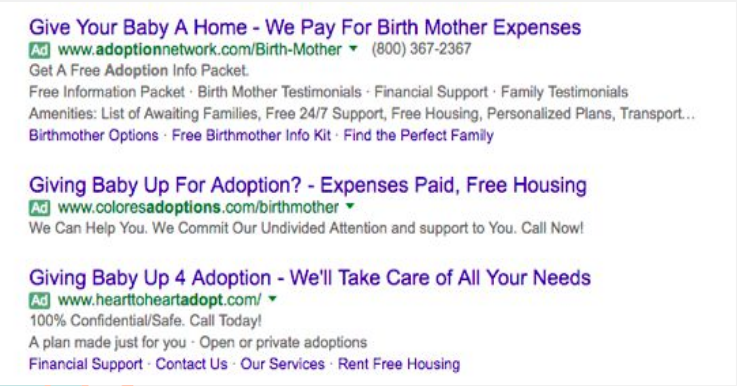
Some adoption agencies & other predatory entities spend up to $10,000 per day on internet ads to find vulnerable and marginalized pregnant people in service of a starkly outsized and competitive market demand for adoptable babies.
Online and in-person ads target BIPOC and other low-income communities, reproductive health clinics, colleges and universities, and other places where pregnant people may lack the financial and/or social support to parent their own children.
What the Research Says:
82% of people who relinquished children for adoption wanted to parent, but lacked the financial resources to do so
88% Medicaid recipients*
75% annual income less than $10,000*
84% wished they would have had access to information that could have helped them parent their child
53% said they felt pressured to place their child for adoption
Crawford, Marcus & Maddenn, Elissa & Ryan, Scott & Aguiniga, Donna. (2016). Understanding option counseling experiences in adoption: A quantitative analysis of birth parents and professionals.
*Sisson, Gretchen. (2022). Who are the women who relinquish infants for adoption? Domestic adoption and contemporary birth motherhood in the United States. Perspectives on Sexual and Reproductive Health. 54. 10.1363/psrh.12193.
Reducing Harm While Building the World We Want to See
After revamping Planned Parenthood Federation of America’s adoption information and resources for pregnant people on their national website and partnering with our fiscal sponsor, Elephant Circle, in 2024, we received a generous seed grant allowing us to complete an in-depth research and co-design process in 2025.
RJiA is now building a groundbreaking digital hub for comprehensive and trauma-informed information, options counseling, peer support, and community-based resources for pregnant people considering adoption.
RJiA envisions a world in which all people have access to true Reproductive Justice, children are not commodified in a capitalist marketplace and displaced from their communities, and all families have what they need to thrive.
Building this world begins with access to accurate information, material resources, and community care.